Exterior cleaning guide
How to Remove Mold, Mildew and Algae From Your Home Exterior in Florida
By Guns N Hoses Pressure Cleaning · August 25, 2026
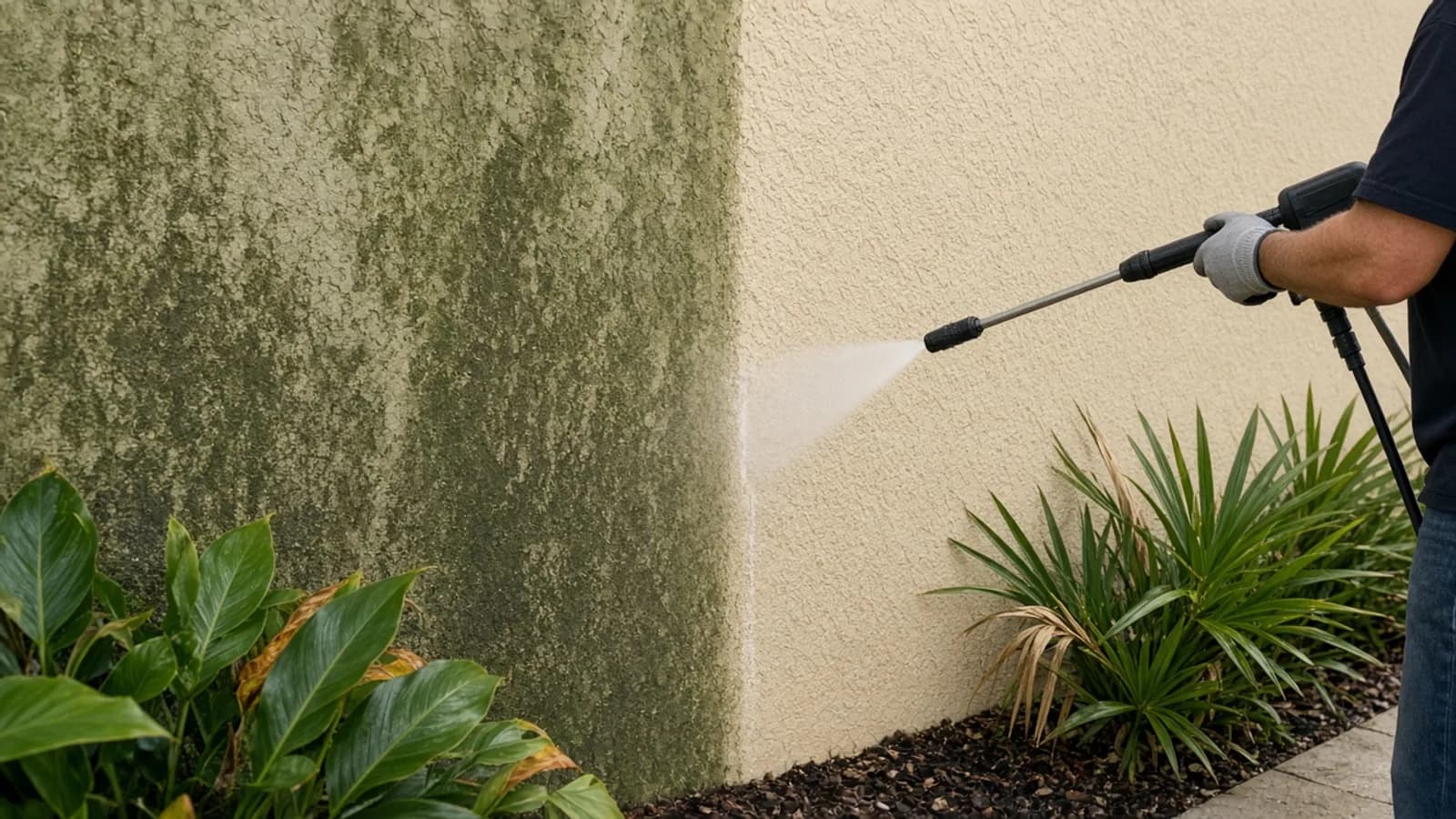
If you want to remove algae house Florida homeowners deal with every summer, start with the climate, not with blame. Warm nights, rain, and irrigation keep exteriors damp. Spores are already in the air. Shaded stucco is simply a comfortable place for them to sit.
Mildew removal on an exterior house is a cleaning and moisture-management problem. It is not a reason to panic about the structure by itself. It is a reason to stop blasting the wall with a rental wand on the hottest setting.
Why Florida homes green up quickly
Organic growth needs moisture, a food source (dirt, pollen, organic dust), and time. Southwest Florida supplies the first two almost year-round. Time takes care of itself if nobody washes the wall.
You will see it faster after a stretch of afternoon storms. The wall looks fine at noon and mottled a week later, especially where the sun never really hits.
Shaded areas and north-facing surfaces
North elevations, side yards between houses, and walls under a deep overhang stay wet after rain. Those are the first places Florida house washing gets requested. South walls can still grow film under a tree canopy or behind a tall hedge.
Moisture sources you can actually change
- Sprinklers aimed at stucco
- Overflow from clogged gutters and dirty downspouts
- Shrubs and hedges tight to the wall
- Downspouts dumping against the foundation
- A/C lines dripping in one spot
- Mulch piled against the coating
Fixing those will not bleach the wall. It will slow the encore. Persistent overflow is a job for gutter cleaning along with the walls.
Landscaping
Tropical plants look right in Sarasota. They also hold humidity against the lower courses of the house. Leave a gap for airflow. Wet foliage slapping the wall after every irrigation cycle is a green stripe waiting to happen.
Where it shows up on the house
Stucco
Texture hides film until it is obvious. Once algae occupies the pits, a hose rinse is mostly theater. A proper wash uses the right dwell and a rinse that does not gouge the finish. That is the core of professional Florida house washing.
Soffits and fascia
These stay shaded and collect spider webs, dirt, and mildew. People notice them last because they do not look at the eaves from the yard. Dark soffits make a freshly washed wall look unfinished.
Siding
Where a Florida home has siding instead of stucco, growth still follows shade and splash-back. Laps can trap moisture. Pressure that is safe on a driveway is not automatically safe here.
Safe exterior cleaning methods
Skip kitchen-chemistry experiments. Do not mix bleach with ammonia, vinegar, or “whatever is under the sink.” Those combinations can produce dangerous gases. You do not need that on a Saturday.
Safer habits:
- Use a product labeled for outdoor algae or mildew, and follow the label
- Wet plants before and rinse after if the product calls for it
- Work from the bottom up on test spots so you do not leave streaks
- Keep pressure low on walls; let dwell time work
- Stay off roofs
- Wear eye protection and keep kids and pets away from runoff
For a whole house, professionals use soft washing on vertical surfaces and save higher pressure for concrete. The comparison is in pressure washing vs. soft washing.
When to call a professional
Call if:
- Growth covers more than a small test patch
- You have two stories, brittle screens, or lots of glass
- Previous DIY left stripes or a burned lawn
- Gutters, walls, and the driveway are all involved
- You are not comfortable on a ladder
A company that does this weekly will also see rust, failing coating, and window-frame issues you might treat as “just mildew.”
After the wash
The wall will look even again. Keep irrigation off the stucco. Watch the same north corner next season. How often to wash in Sarasota helps you set a reminder that matches shade and landscaping.
Organic film is a Florida maintenance item, like mowing. You are not behind because it appeared. You are maintaining the house when you remove it the right way. Request a free quote if the growth has moved past a weekend project.
Frequently asked questions
Is green growth on stucco dangerous?
It is mainly a moisture and appearance issue on the exterior, and it can make walkways slick if it spreads to concrete. Indoors is a different conversation. On the house, the job is to remove the film and reduce the conditions that feed it.
Can I bleach the walls myself?
Household bleach is easy to misuse on landscaping, colored stucco, and aluminum. Mixing products on your own can create hazardous fumes. If you DIY, use a cleaner labeled for exterior organic growth, protect plants, and never mix chemicals. Many homeowners prefer a professional wash for the whole elevation.
Why does it come back on the same wall?
Shade, irrigation, and poor airflow do not disappear after one cleaning. The same north wall will be first again. Trimming plants and fixing sprinklers slows the return. It does not stop Florida humidity.
Do gutters really matter for wall stains?
Overflowing gutters send dirty water down the fascia and stucco. That repeat wetting is a common streak pattern under the roofline. Cleaning gutters and the walls together often makes the result last longer visually.
Green film showing up on the north wall?
Guns N' Hoses Pressure Cleaning handles exterior organic growth on Sarasota-area homes with methods matched to stucco, soffits, and trim. Call 941-524-6233 or request a free quote.