Exterior cleaning guide
Pressure Washing vs. Soft Washing: Which Is Better for Florida Homes?
By Guns N Hoses Pressure Cleaning · July 28, 2026
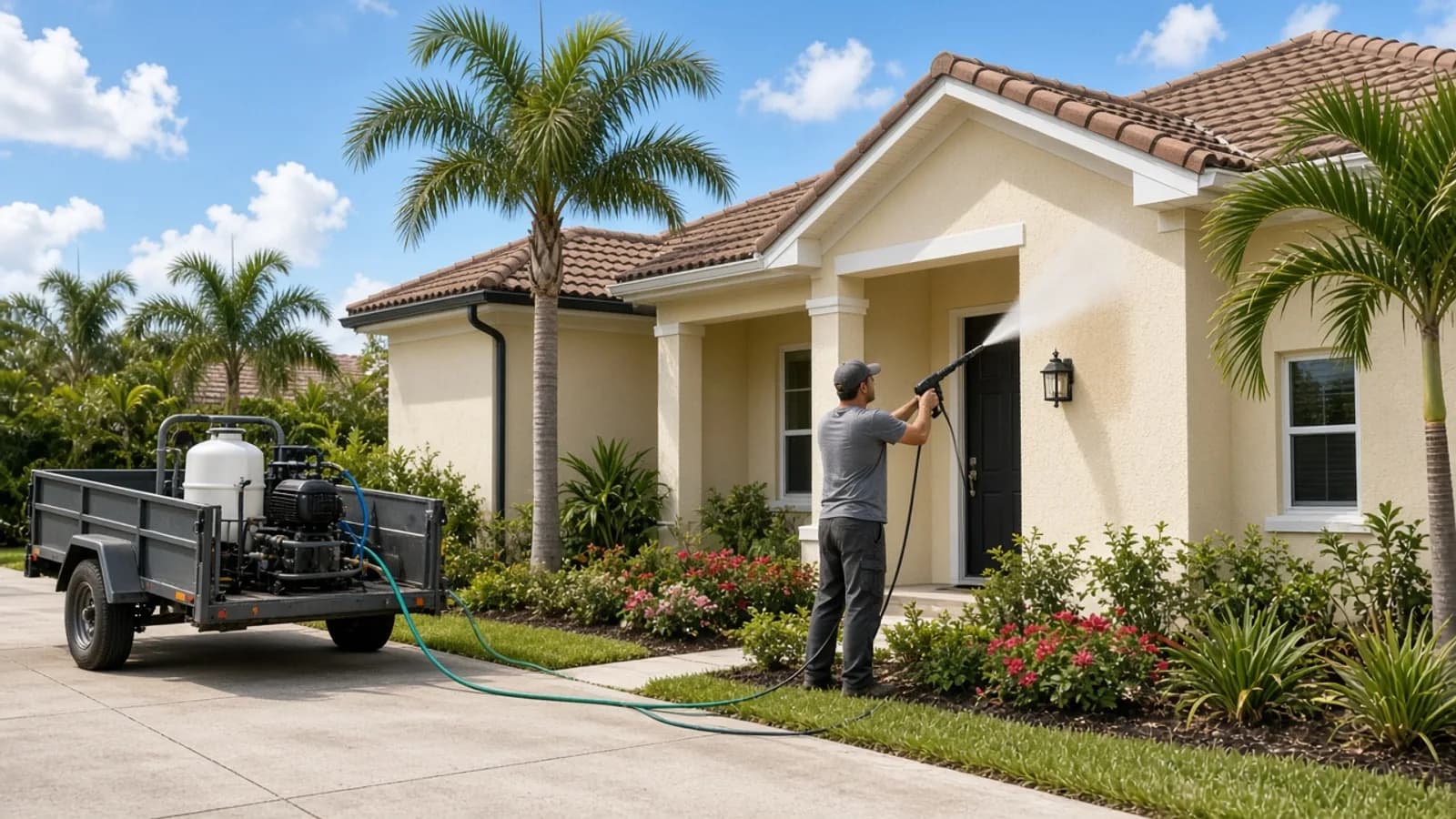
People use “pressure washing” as a catch-all for any exterior cleaning. On a Florida house that mix-up matters. Stucco, soffits, roofs, and screens do not behave like a warehouse floor. Pressure washing vs soft washing Florida is less about which name sounds stronger and more about matching force to the material.
Both methods can leave a property looking cared for. Used on the wrong surface, high pressure can etch, scar, or drive water where it does not belong.
What pressure washing is
Pressure washing (sometimes called power washing when the water is heated) uses a pump to push water through a nozzle at high PSI. On durable horizontal surfaces, that force lifts packed dirt, tire film, and some organic staining. A surface cleaner attached to the wand keeps the pattern even on concrete.
It is a mechanical process. The water does the cutting. That is useful on:
- Concrete driveways and sidewalks
- Many pool decks that are poured concrete
- Some well-set pavers, with care around joint sand
- Certain masonry that is sound and unpainted
It is a poor default on anything thin, textured, or already weathered.
What soft washing is
Soft washing applies a cleaning solution at low pressure, lets it dwell, then rinses. The chemistry breaks down algae, mildew, and biofilm so the rinse does not have to blast the surface clean. Pressure stays in a range closer to a strong garden hose than a concrete job.
That approach fits vertical walls, painted trim, and roofing systems that would shed granules or crack under a 0-degree tip. It is the usual method behind thorough house washing on Florida stucco.
Surfaces common on Sarasota homes
Stucco
Most Sarasota and Bradenton houses wear a stucco or textured coating. The finish has peaks and valleys. High pressure can scar the texture, leave wand marks, or open hairline cracks. Soft washing is the safer starting point for walls. Stubborn spots still get attention. They do not get a turbo nozzle from six inches away.
Siding and trim
Vinyl, fiber cement, and painted wood trim all have limits. Excessive pressure can force water behind laps, bruise vinyl, or peel failing paint. If the siding is sound, a controlled wash beats a high-PSI pass every time.
Roofs
Tile and shingle roofs in this climate collect algae streaks quickly. They also fail when someone treats them like a driveway. Granules scour off. Tile edges chip. Water can be driven under laps. Professional roof cleaning is a different workflow, which we cover in roof cleaning: soft washing vs. pressure washing.
Concrete
Concrete is porous and usually the best candidate for true pressure washing. Even here, PSI and nozzle choice still matter. A new decorative overlay, a painted slab, or a crumbling control joint is not the same as a thick driveway that has seen twenty summers.
Pavers
Pavers clean well, but joint sand can blow out if the wand is too aggressive. The goal is to lift algae and dirt without emptying the joints or scarring the face. After a wash, some owners choose sealing. That is a separate decision, described in our paver cleaning and sealing article.
Screened areas
Pool cages, lanai screens, and porch enclosures are easy to ruin with a close, high-pressure spray. Mesh tears. Spline pops. Aluminum oxidizes unevenly. Cleaning those structures is about distance, angle, and lower force. See pool cage and lanai cleaning if that is the surface you are staring at.
Why pressure should match the surface
A pump does not know the difference between a garage apron and a 30-year-old soffit. The operator does. Too little dwell on a shaded north wall leaves green film behind. Too much pressure on that same wall can leave a clean but damaged finish.
Florida weather also changes the risk. After tropical rain, wood decks swell. Older stucco hides cracks. Screens that look fine dry can split when they are hit with a jet. A walkaround before the machine starts is not ceremony. It is how you decide where high pressure belongs.
Damage from excessive pressure
Homeowners who rent a big machine for a weekend often learn this the hard way:
- Wand stripes on stucco that never quite blend
- Etched concrete that looks cleaner but feels rough
- Blown-out paver sand and shifting stones
- Shredded screen mesh
- Water behind window frames or electrical fixtures
- Gouged wood on fences and decks
None of that is an argument against professional pressure washing. It is an argument against treating every square foot like industrial concrete.
Which is “better”?
Neither method wins as a blanket answer. Concrete and many hardscape surfaces often need real pressure. House walls, roofs, and screens usually need a softer process. A complete property visit may use both.
If you are comparing companies, ask what they will use on each surface, not whether they own a large pump. For timing, how often to wash a Sarasota house is the next practical question. For organic staining on walls, removing mold, mildew, and algae explains why chemistry and dwell time matter.
Guns N' Hoses Pressure Cleaning treats pressure washing services as a set of methods, not a single trigger pull. If you want a recommendation for your mix of stucco, roof, and hardscape, request a free quote with a few photos of the elevations that worry you.
Frequently asked questions
Is soft washing just low-pressure washing?
Soft washing uses much lower pressure than a typical concrete job and relies on the right cleaning solution plus dwell time to loosen organic growth. The rinse is controlled. It is not the same as turning a pressure washer down and hoping the wall survives.
Can I pressure wash my Florida roof?
Roofs are a poor place for aggressive high pressure. Tile, shingles, and underlayment can be damaged, and walking the roof adds risk. Professional roof cleaning is usually a soft-wash approach from a stable working position.
Which method is better for a concrete driveway?
Concrete and many paver surfaces tolerate higher pressure, often with a surface cleaner for an even pass. Even then, pressure should match the condition of the slab. Brittle edges, painted concrete, and sand-set pavers still need judgment.
Will one method clean the whole house?
Most Florida properties are mixed surfaces. A single visit may combine a softer wash on stucco and soffits with higher pressure on the driveway or pool deck. The better question is which method fits each surface, not which method wins overall.
Not sure which method your surfaces need?
Guns N' Hoses Pressure Cleaning matches pressure to the material, whether that is a stucco wall, a tile roof, or a concrete driveway in Sarasota or Bradenton. Call 941-524-6233 or send photos for a free quote.