Exterior cleaning guide
Why Florida Driveways Turn Black — and How Pressure Washing Removes It
By Guns N Hoses Pressure Cleaning · August 18, 2026
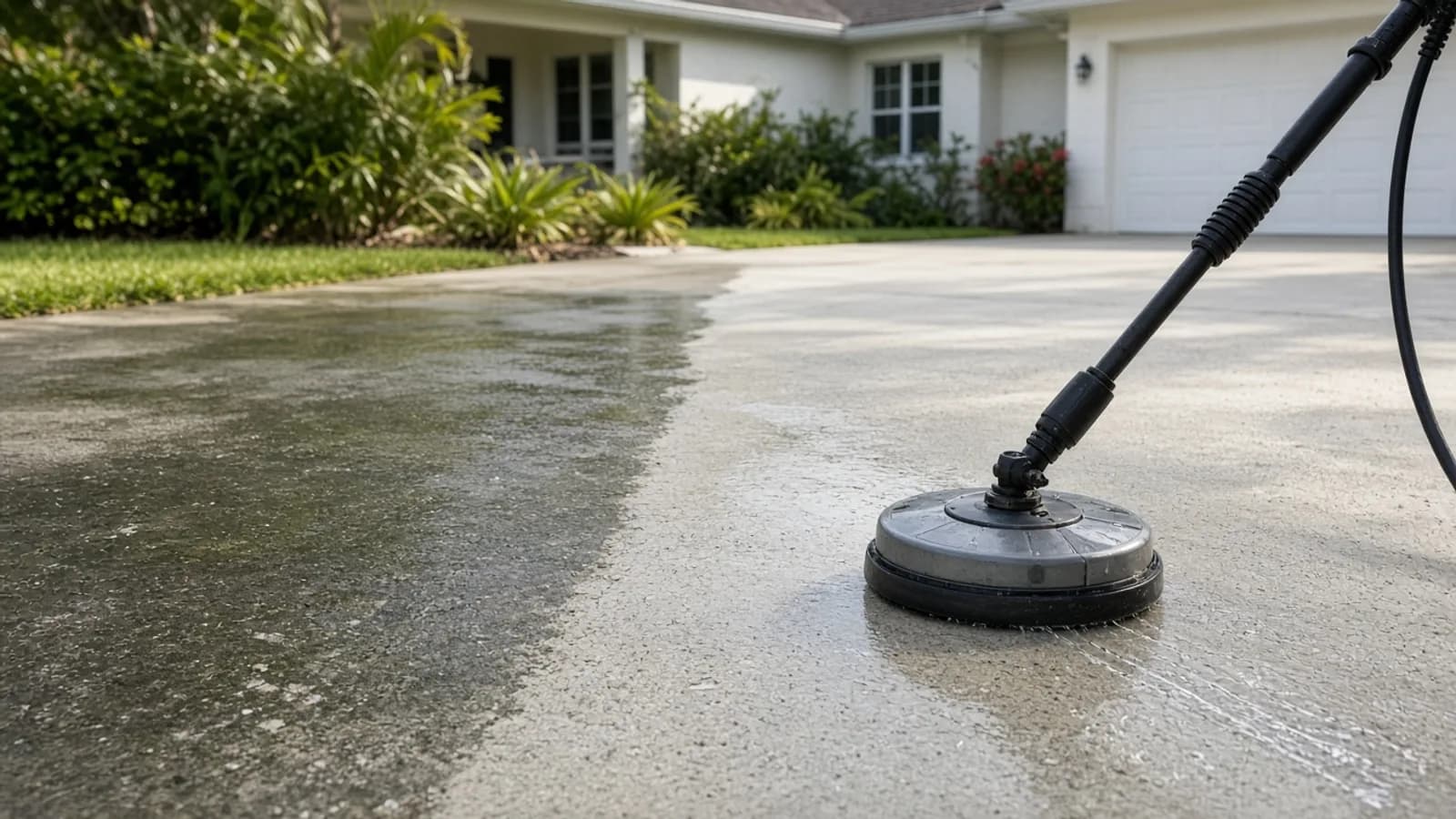
A pale driveway does not stay pale for long in this climate. Driveway pressure washing Sarasota searches spike when the slab that used to look light gray has gone charcoal, especially along the tire tracks and the shady strip beside the garage.
That color change is not only “the concrete getting old.” Florida humidity feeds a living film on porous surfaces. Pressure washing is how you lift it before it becomes a traction problem and a curb-appeal problem at the same time.
What you are actually looking at
Several layers stack on a Florida driveway:
- Algae — green to black, loves shade and irrigation overspray
- Mildew and related growth — gray or black speckling in pores
- Dirt and pollen — ground in by cars and summer storms
- Organic debris — leaves, oak tannins, mulch washout
- Tire marks — rubber film that follows the same two paths every day
Mold talk on driveways is often people using “mold” for any dark organic stain. The practical point is the same: it is biological plus mineral dirt, sitting in a surface that never fully dries.
Why concrete holds it
Concrete is a sponge at a microscopic level. Water soaks in. Spores follow. In Sarasota, nights stay warm and rain is frequent for months. A driveway under a tree or on the north side of the house may not see enough sun to bake the film off.
Pavers have extra hiding places in the joints. Sand holds moisture. Weeds take advantage. The face of the paver still stains, just with a different pattern than broom-finished concrete.
Tire tracks and the “two-tone” driveway
The lanes where you park stay darker because rubber and oil mix with the same algae everyone else has. The center strip and the edges can look completely different. A surface cleaner is useful here because it makes an even pass instead of leaving wand tiger stripes.
If only the tire paths are black and the rest is merely dusty, you still have organic growth in those paths. Spot-treating with a handheld nozzle often looks patchy. Cleaning the full slab keeps the color consistent.
Humidity, rain, and the return of the film
After a wash, the driveway looks new. Then the rainy season starts again. That does not mean the cleaning failed. It means the climate is still doing what it does. Homes that irrigate the lawn onto the apron, or that sit under oaks, will darken faster. Parking a boat or trailer in the same rectangle creates a shade patch of its own.
Regular driveway cleaning is maintenance. Letting the film go for years usually means more dwell time and more passes, not a mysterious stain that “won’t come off.”
Curb appeal and first impressions
Buyers, guests, and HOA boards all see the driveway before they see the foyer. A black slab next to freshly painted stucco makes the house look neglected even when the interior is fine. The opposite is also true: a bright apron lifts the whole elevation.
If the house walls are also stained, wash both in a planned visit so you do not highlight dirty stucco next to clean concrete. Signs your home needs professional washing covers that mismatch.
Slippery growth is a safety issue
Organic film is slick when wet. That matters on the walk from the car in a summer storm, on a sloped driveway, and on pool-deck concrete that uses the same playbook. Cleaning is not only cosmetic. It restores a more predictable walking surface.
How professional surface cleaning works
A technician will typically:
- Clear the slab of cars, pots, and hoses
- Pre-treat heavy organic areas when needed
- Use a surface cleaner for even coverage on open concrete
- Detail edges, expansion joints, and along the garage door
- Rinse toward the street or a drain without flooding neighboring beds carelessly
Pavers get a gentler or more careful pass so joint sand stays in place. If you want protection after the clean, paver cleaning and sealing is the related service — sealing belongs on a clean, dry surface, not on top of algae.
What washing will not magically fix
Cracks, spalling, and old rust from irrigation still need other repairs. Deep oil may remain as a shadow. Paint overspray is not algae. A good visit is honest about those limits.
If the dark film is the main issue, professional cleaning is the direct fix. For walls that match the driveway’s green cast, removing algae from the house is the companion read. Request a free quote with a photo of the slab in daylight — shade can hide how uneven the staining really is.
Frequently asked questions
Is the black film just dirt?
Dirt is part of it, but Florida driveways also collect algae, mildew, and other organic growth in the pores of the concrete. Tire rubber and oil add darker patches. That mix is why a broom rarely brings the slab back to an even color.
Why does the driveway get slick after rain?
Organic film stays wet longer than clean concrete. Combined with pollen and fine sand, it reduces traction, especially on shaded sections and the path from the car to the door.
Will washing remove every oil stain?
Many organic stains lift well. Deep petroleum stains can lighten without disappearing completely, depending on how long they have been in the slab. A quote should be honest about what is growth versus what is absorbed oil.
Do paver driveways turn black the same way?
Pavers stain too, often with algae in the joints and on the faces. The cleaning method still has to protect joint sand. Sealing is optional after a proper clean and dry.
Driveway looking darker than the house?
Guns N' Hoses Pressure Cleaning restores concrete and paver driveways in Sarasota and nearby communities with professional surface cleaning. Call 941-524-6233 or request a free quote.